The magazine for authors
Chapter I: Craft & Practice
From the first sentence to the finished manuscript: tools, habits and the form in which a text reaches a publisher’s desk.
6 articles
- Writing Software for Authors: How to Choose the Right Tool for Your BookA novel is a document you live with for months or years. Here is what writing software needs to do for a book-length project, how the familiar tools compare, and how to choose one that never locks your manuscript in.6 min read
- How to Write Your First Book: From Idea to Finished First DraftMost first novels do not fail for lack of talent. They stall halfway. These are the principles that carry you from the first spark to a complete first draft, and why finishing beats polishing.6 min read
- Standard Manuscript Format: How to Format and Measure Your NovelAgents and editors expect manuscripts in a standard format and measure them in words, not pages. Here is what that format looks like, how to count your length, and the mistakes that mark a submission as amateur.3 min read
- What Is a Manuscript? Meaning, Stages and the Submission DraftFrom first draft to galley proof, your book is called a manuscript, but it is not always the same thing. What the word means, the stages a manuscript moves through, and what the version you send to agents should look like.6 min read
- How to Write a Children's Book: Age Groups, Word Counts and IllustrationChildren's books are short, but they are not easy. Which formats suit which ages, what word counts publishers expect, how text and pictures work together, and what to know before you submit.5 min read
- How to Write Fanfiction: Craft, Communities and Moving On to Original WorkFor many writers, fanfiction is where it all starts, and it is a genuinely good training ground. What the craft demands, how fan communities work, what to know about copyright, and how a fan story can become an original novel.5 min read
Chapter II: Dramaturgy & Character
What makes a story hold: tension, turning points and characters whose desires drive the plot.
3 articles
- How to Plot a Novel: Proven Methods ComparedThree-act structure, the Hero’s Journey, the Snowflake Method, Save the Cat or scene cards: what each method does, who it suits and how much planning a novel really needs.6 min read
- Character Profiles: How to Build Characters with DepthA useful character profile is not a list of eye colours and favourite foods. It is a tool that generates story. What belongs in one, how want, wound and need fit together, and how to use the profile while you draft.6 min read
- What Is Plot? The Blueprint of a StoryPlot is not just what happens. It links events through cause and effect, drives them with conflict and shapes them into a rising arc. Here is what plot is made of and how to test whether yours holds.5 min read
Chapter III: Literary Worlds
The laws of each genre, from thriller to children’s book, and where it pays to break them on purpose.
3 articles


- Mystery vs. Thriller: What’s the Difference?They often share a shelf, but mysteries and thrillers create tension in different ways: one with a puzzle, the other with a threat. How the two genres differ in structure, viewpoint and pace, and which subgenres belong to each.6 min read
- Book Genres Explained: A Guide for AuthorsFrom romance to science fiction, from cozy mystery to romantasy: the main fiction genres and their subgenres, the difference between genre and age category, and why the right classification matters so much to agents, retailers and online stores.6 min read
- How to Write Dark Romance: Conventions, Reader Expectations and Responsible CraftDark romance pairs a love story with dark themes, morally grey characters and deliberately unsettling moments. What defines the subgenre, what readers expect, and how to handle content warnings, framing and platform rules with care.6 min read
Chapter IV: Book Aesthetics & Typesetting
Type area, typeface and cover: what makes a book feel valuable in the hand before a single line is read.
2 articles
- How to Design a Book Cover: Genre, Typography and Print FilesYour cover decides whether anyone clicks on your book at all. How to send the right genre signals, keep the title readable at thumbnail size, set up ebook and print covers correctly and stay on the right side of image rights.6 min read
- Paperback Trim Size, Binding and Print: How to Plan Your BookBefore your paperback can be printed, trim size, paper, margins and cover have to fit together. The common trim sizes, how page count drives spine width, and what determines your printing cost.5 min read
Paperback Trim Size, Binding and Print: How to Plan Your Book
Before your paperback can be printed, trim size, paper, margins and cover have to fit together. The common trim sizes, how page count drives spine width, and what determines your printing cost.
5 min read · Updated September 23, 2026An ebook reflows to fit any screen. A printed book is a physical object with fixed dimensions, and every decision depends on another: trim size shapes the text block, the text block sets the page count, and the page count sets the spine width and your printing cost. Once you see that chain, you plan in the right order and never rebuild your cover three times.
This guide covers the paperback as self-published authors use it: a perfect-bound softcover, printed on demand or in a short run.
Common trim sizes
Trade paperbacks in the US and UK come in a handful of sizes that readers find familiar. The right choice depends on genre and length: most fiction sits comfortably in the smaller sizes, while non-fiction, workbooks and very long novels move up.
| Trim size | Typical use |
|---|---|
| 5 × 8 in | Fiction, especially novels of moderate length |
| 5.25 × 8 in | Fiction; a touch wider than 5 × 8 |
| 5.5 × 8.5 in | Fiction and narrative non-fiction |
| 6 × 9 in | Non-fiction, memoir, long novels that would otherwise run too many pages |
| 8.5 × 11 in | Workbooks, manuals, illustrated books |
Your print provider decides which sizes you can choose. Amazon KDP offers a fixed list, and so does IngramSpark. Check that the size you want is available with every provider you plan to use, and settle it before you typeset.
Binding and paper
Paperbacks are almost always perfect bound: the pages are glued into the cover at the spine. It is inexpensive and entirely adequate for a novel. Sewn bindings last longer and open flatter, but they are rarely offered in print on demand.
- Cream paper is the norm for fiction. It has less glare and feels warmer.
- White paper suits non-fiction, images and tables.
- Paper thickness decides how thick the book feels. KDP and IngramSpark list a thickness per page for each paper.
- Colour interiors cost far more than black and white. A novel does not need one.
- Cover finish: matte or gloss. Matte looks quieter and more upmarket; gloss makes colours pop.
If you want to add a hardcover, many providers offer one on demand as well, usually a case laminate with the design printed directly on the board rather than a dust jacket. It costs more to produce, needs its own cover with wrap, and normally its own ISBN, because every format is a separate product.
Page count and spine width
Spine width is simply the page count multiplied by the thickness of one page for your chosen paper. You do not need to do the arithmetic yourself: every provider offers a calculator or a cover template generator that gives you the exact dimensions.
Some print processes require the page count to be a multiple of a certain number, at least an even number. Blank pages at the end of a book are therefore perfectly normal.
Bleed and margins
Bleed is extra artwork that extends past the trim line and is cut off after printing. You only need it where images or colour run to the edge of the page. At KDP it is 0.125 in (3.2 mm) on the outer edges. A text-only interior needs no bleed; a cover always does.
Margins decide how comfortable the book is to read. The one that matters most is the gutter, the inside margin: in a perfect-bound book part of each page disappears into the spine. The thicker the book, the wider the gutter needs to be so readers do not have to crack the spine. Providers publish minimum gutters by page count; a well-made book usually goes beyond them.
- Outer and bottom margins a little more generous than the top, so thumbs have room
- A body text size suited to the trim; around 10 to 12 pt is typical for fiction
- Justified text with hyphenation to avoid rivers of white space
- Running heads and page numbers outside the text block
- No widows or orphans, the single stranded lines at the top or bottom of a page
What drives printing cost
With print on demand you pay a fixed charge per copy plus an amount per page. Page count is therefore your biggest lever. A slightly larger trim or a slightly smaller type size can save many pages, but never at the expense of readability. A colour interior multiplies the cost. Exact prices change, so check your provider's current terms (as of 2026).
With an offset print run, the unit price falls as quantity rises, but you pay everything up front and have to store and ship the books yourself. For most self-published debuts, print on demand is the sensible start.
Keep in mind that printing cost and your share together set the retail price. A 500-page paperback printed on demand can end up so expensive that it struggles next to traditionally published titles. Before you raise the price, look again at trim size and margins.
Planning order for your paperback
- Print provider chosen and available trim sizes checked
- Trim size and paper decided
- Interior typeset with a suitable gutter and type size
- Page count final after the last proofread
- Spine width taken from the provider's calculator
- Print cover with bleed built from those numbers
- Proof copy ordered and checked in hand
For the wrap itself, read how to design a book cover; for uploading interior and cover, see how to publish on Amazon KDP.
Frequently asked questions
What is the best trim size for a novel?
There is no single best size, but there are proven ones: 5 × 8, 5.25 × 8 or 5.5 × 8.5 in for most fiction, 6 × 9 in for long books and non-fiction. Look at the sizes of comparable recent titles in your genre.
Do I need bleed for the interior?
Only if images or colour run to the edge of the page. A text-only interior needs no bleed. The cover always does.
Can I change the trim size later?
Yes, but it means a new layout: page count, spine width and cover all change. With some providers a different trim size is also a new edition that needs its own ISBN.
Chapter V: The Road to the Reader
Query, publisher or self-publishing: the routes from manuscript to book, and what each of them demands.
3 articles

- How to Publish a Book: The Paths from Manuscript to MarketTraditional publisher, small press, self-publishing or a paid service: every path to a published book has its own strengths, costs and timelines. A clear-eyed overview to help you choose the right one for your manuscript.6 min read
- How to Publish on Amazon KDP: Ebook and Paperback, Step by StepKindle Direct Publishing is where many self-published authors start. How to set up your account and tax information, choose metadata and categories, understand pricing and royalties, and prepare your print files.6 min read
- How to Write a Synopsis (and the Rest of Your Query Package)Agents decide from a query letter, a synopsis and a few sample pages whether to read your manuscript. What goes into each part, how long a synopsis should be and the mistakes that lead to a quick pass.5 min read
Chapter VI: Visibility & Reach
How readers find your book: author website, series, reviews and what a book really earns.
3 articles
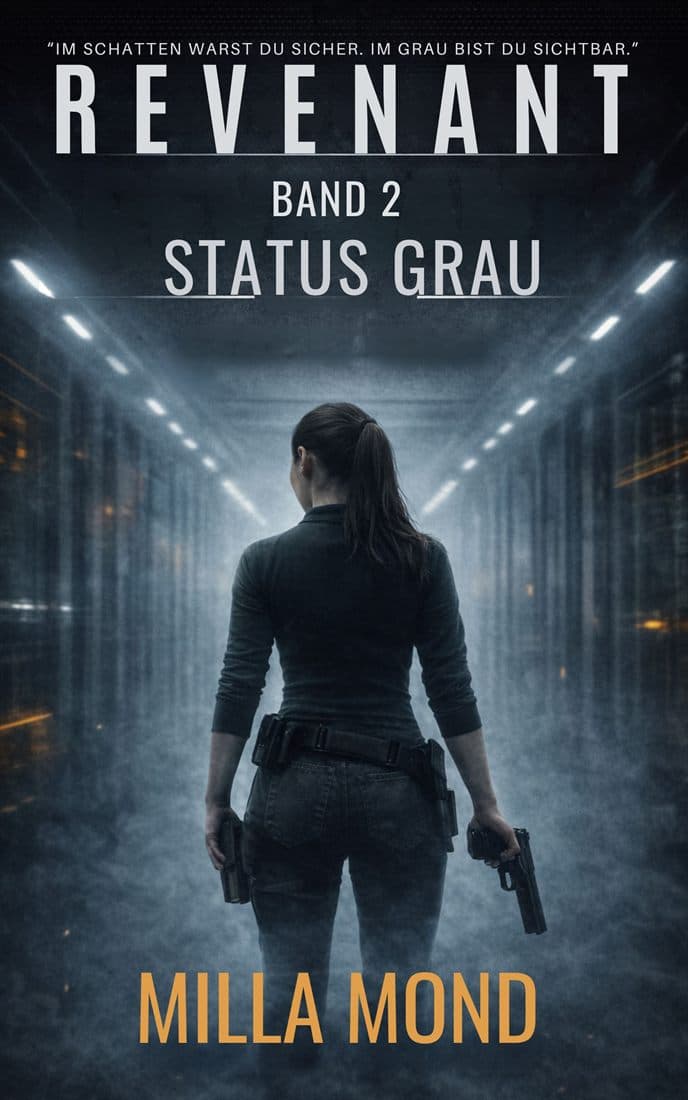
- Book Marketing for Authors: What Actually WorksMarketing starts with your cover and blurb, not after launch day. A clear-eyed guide to audience, newsletters, social media, reviews, ads, bookstores and series.6 min read
- How to Build an Author Website: Domain, Pages and What to Put on ThemYour website is the one place online that you fully own. Which pages it needs, what readers and press look for, and the privacy basics to cover before you launch.6 min read
- How Much Do Authors Earn per Book? Royalties, Advances and Real NumbersRoyalties, advances, earning out: what reaches you from a book's cover price depends on how it is published. Worked examples for traditional and self-publishing, subsidiary rights and the costs authors forget.5 min read